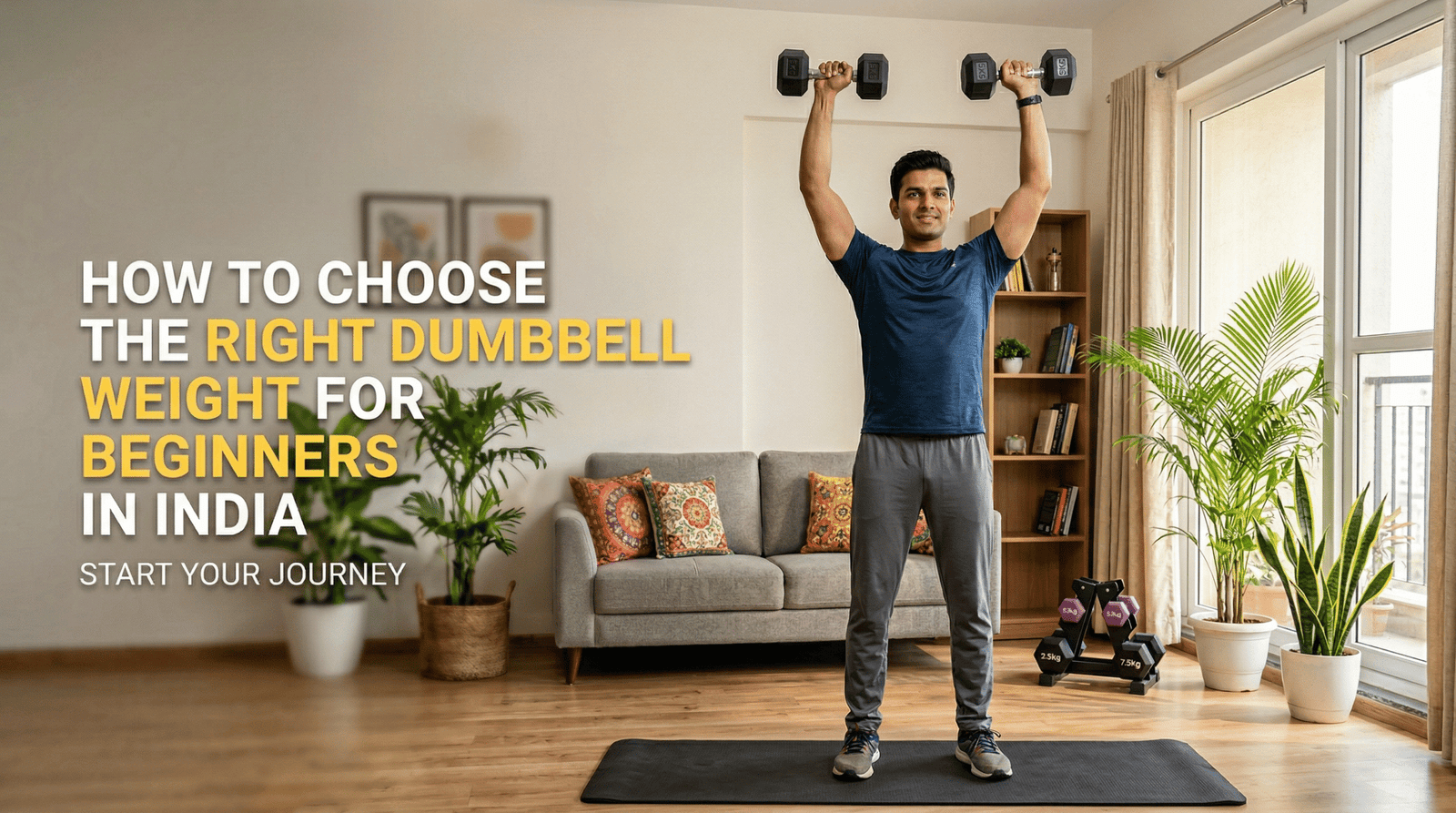
Imagine beginning your fitness journey at home, determined to improve your health yet uncertain about which dumbbell weight will support your progress. This scenario is common among many first-time strength trainers in India. If you are new to strength training, choosing the right dumbbell weight is essential for achieving effective, safe, and long-term results.
If you’ve already started with our Workout for Beginners guide and understood the importance of building consistency through Strength Training for Beginners, this is the next crucial step in your journey.
In this comprehensive guide, I will provide expert tips, highlight key factors, and outline actionable steps to help you confidently select the optimal dumbbells for your home gym.
Table of Contents
- Why Choosing the Right Dumbbell Weight Matters
- Factors to Consider for Indian Beginners
- Recommended Dumbbell Weights (Male & Female)
- How to Test the Right Weight
- Mistakes to Avoid
- Pro Tips for Buying Dumbbells in India
- Frequently Asked Questions (FAQs)
- What’s Next?
- Final Thoughts
- Why Choosing the Right Dumbbell Weight Matters
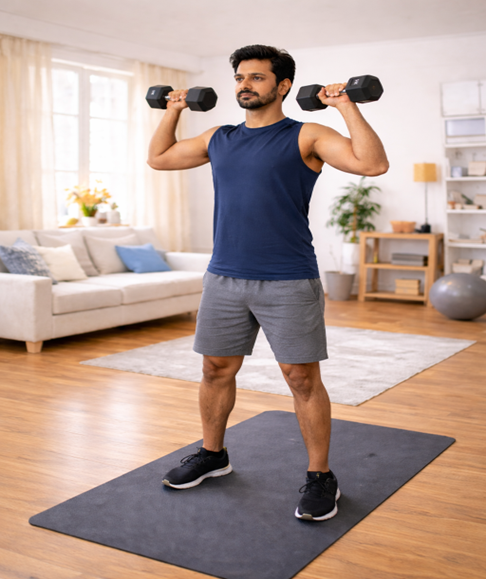
Choosing the correct dumbbell weight is the foundation for safe and effective strength training. For example, a beginner who selects a dumbbell that is too heavy may quickly experience strain or discomfort during their first workout, potentially leading to injury, poor form, and loss of motivation. On the other hand, using weights that are too light will not provide sufficient challenge for muscle development or visible results. Especially for beginners in India, where access to expert guidance may be limited, making an informed choice can set you up for long-term fitness success.
2. Factors to Consider for Indian Beginners
a) Fitness Goals
- Are you aiming for weight loss, muscle gain, or overall fitness?
- For toning and endurance, lighter weights with higher reps are ideal.
- For muscle building, moderate to heavy weights with lower reps work better.
b) Age and Gender
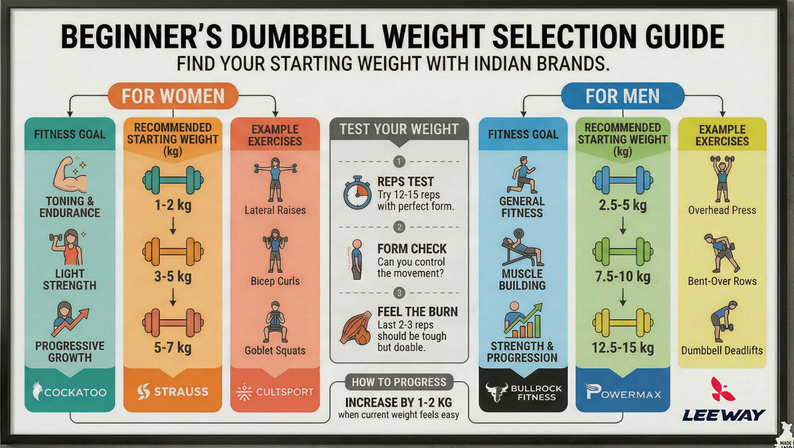
- Women are often advised to start with 2-5 kg dumbbells, as research shows that, on average, there are differences in muscle mass and upper body strength between individuals of different sexes. However, it is essential to consider individual strength levels rather than relying solely on gender-based recommendations.
- Men usually begin with 5-10 kg.
- Teenagers and seniors may need lighter weights (1-3 kg).
c) Body Type and Current Strength
- Assess your current fitness level. Beginners should err on the side of caution.
d) Accessibility and Budget
- Adjustable dumbbells or sets can be cost-effective for evolving fitness needs.
- Evaluate the quality of the dumbbells, ensuring they offer a secure grip and are constructed from materials such as rubber coating or neoprene, which are resistant to humidity and minimise the risk of rusting in the Indian climate.
e) Indian Brands and Availability
- Popular brands: Leeway Fitness, Kobo, Aurion, Flexnest, Amazon Basics, and Decathlon.
- Consider local availability and after-sales support.
3. Recommended Dumbbell Weights (Male & Female)
- Absolute Beginners (Men): 5 kg (single dumbbell), or a pair of 2-4 kg each
- Absolute Beginners (Women): 2-3 kg (single), or a pair of 1-2 kg each
- Intermediate: Add 1-2 kg increments as you progress. For example, after comfortably performing 12 repetitions with your current weight for all sets over several sessions, increase the dumbbell weight by 1-2 kg to continue challenging your muscles and promoting strength gains.
Dumbbell Weight Chart for Beginners:
| Fitness Level | Men (per hand) | Women (per hand) |
|——————- |———————-|————————–|
| Beginner | 2-5 kg | 1-3 kg |
| Intermediate | 5-10 kg | 3-5 kg |
| Advanced | 10+ kg | 5+ kg |
4. How to Test the Right Weight
- Pick a Dumbbell: Start with your estimated weight.
- Perform 10-12 repetitions: If you can maintain proper form throughout and begin to experience muscle fatigue, characterised by a noticeable decrease in muscle strength or a mild burning sensation, during the final two to three repetitions, without experiencing any sharp pain, the weight is appropriately challenging and considered safe for use.
- Too Easy? Go higher in small increments.
- Too Hard? Drop down a size.
Pro Tip: Always prioritise proper form over heavier weights.
5. Mistakes to Avoid
- Jumping into heavy weights too soon
- Ignoring warm-ups and cool-downs
- Buying poor-quality or slippery dumbbells
- Comparing your progress with others
- Skipping professional advice (online or offline)
6. Pro Tips for Buying Dumbbells in India
- Go Adjustable: Save money and space with adjustable dumbbells.
- Check Grip: Opt for anti-slip handles, especially in humid climates.
- Material Matters: Rubber-coated or neoprene dumbbells are best for home use.
- Compare Prices: Check offline stores and online platforms (Amazon, Flipkart, Decathlon).
- Read Reviews: Look for Indian user feedback for real-life experiences.
Looking for reliable options?
Explore our premium dumbbells collection by Leeway Fitness, designed for durability, comfort, and Indian home conditions.
7. Frequently Asked Questions (FAQs)
Q: Can I use the same dumbbell weight for all exercises?
A: Not always. Some muscles (like chest and back) are stronger and may require heavier weights than smaller muscles (like shoulders or biceps).
Q: How often should I increase my dumbbell weight?
A: Once you can do 15+ reps with ease and perfect form, it’s time to progress.
Q: Are there special considerations for the Indian climate?
A: Yes! Rubber or neoprene-coated dumbbells prevent rust and offer better grip in humid conditions.
8. What’s Next?
Now that you know how to choose the right weight, the next step is learning how to use it effectively.
Read next: 15-Min Full Body Dumbbell Workout at Home (Beginner Routine)
9. Final Thoughts
Selecting the best dumbbell weight for beginners in India can be straightforward if you follow a structured approach:
- First, identify your personal fitness goals to guide your choices.
- Second, begin with lighter weights and progress at a comfortable pace while continuously monitoring your body’s response.
- Third, prioritise investing in high-quality equipment to support safety and long-term use.
- Fourth, incrementally increase the dumbbell weight as your strength and confidence improve.
- Finally, establish a consistent workout routine to ensure steady progress.
By adhering to these actionable steps, you can build a sustainable and effective strength training regimen—especially when combined with a strong foundation built through Workout for Beginners and a deeper understanding gained from Strength Training for Beginners.
Written by
Team Leeway Fitness
“Empowering your strength journey with the right knowledge and equipment.”